
Commonly Missed Areas in Office Cleaning
Walk into almost any office a few minutes after the cleaning crew leaves and the floors look good. Desks are clear, restrooms are stocked, the trash is gone. From across the room, it reads as a well-run facility. Then you start looking closer, and the picture gets more complicated.
The overhead return air grille above the conference room has a thin gray fringe around the edge. There is dust behind the two filing cabinets nobody has moved since they were installed. The inside of the microwave has a splatter on the ceiling panel that has probably been there since last winter. None of it shows unless someone goes looking, which is exactly why it gets missed.
Over 20 years of commercial cleaning across the Lehigh Valley, the same pattern shows up in almost every building we take over. The visible work gets done. The invisible work gets skipped, usually because nobody wrote it down. A cleaning scope that says "dust the office" does not tell a crew what that means. A scope that lists the return vents, the baseboards, the tops of the storage cabinets and the inside of the appliances actually gets done.
Here is where the gaps usually are, and what it takes to close them.
Why Missed Areas Matter More Than They Look
These spots are not just cosmetically sloppy. They change how the building performs and how people feel working in it.
Circulation. Air moves through ductwork and returns. Dust sitting in a return grille or on a ceiling fan blade gets pulled back into the room and redistributed. You are not cleaning the surface where the dust settled — you are cleaning the part of the system that keeps re-suspending it.
Equipment life. Printers, copiers, and shredders pull air through vents to cool. A dust-clogged intake runs hotter and works harder. So does a computer fan. This is a slow failure that nobody traces back to cleaning.
Use of the space. A break room that stays dirty stops getting used. People take their lunch out of the building or at their desk. You lose the informal interaction that a break room is supposed to create, and you lose the informal cleaning of the employee's own hands and keyboard that used to happen during it.
Odors. Trash cans that are emptied but never washed, or a refrigerator that has not been cleared, will keep announcing themselves long after the waste is gone. Odor is the fastest way a facility signals that cleaning is being skipped.
None of these are emergencies. They are slow drains, and they are the reason a building can look fine and still feel wrong to the people working in it.
The Areas That Get Missed Most
These are the ones we check first when we take over a contract. In no particular order:
Return Air Vents and Ceiling Fans
Out of sight, so out of mind, until the room starts smelling musty. Return grilles and ceiling fan blades are the single most commonly skipped item in office cleaning scopes. They need a ladder and a specific method, not a damp rag, and they belong on a quarterly cycle rather than a nightly one. Our crews clean them with HEPA-filtered vacuums and a microfiber cloth on a pole extension.
Behind and Under Movable Furniture
Desks, filing cabinets, and bookshelves rarely move. The gap behind them becomes a dust trap and, in a carpeted space, a quiet harbor for whatever else has come in on people’s shoes. Vacuuming under desk furniture and moving cabinets periodically is a scheduled task, not something to be left to judgment on the night.
Light Fixtures and Lamps
Dust on a fixture housing reduces output, so the room reads dimmer and people turn up other lights or raise the thermostat on their own. Over time a whole floor can end up over-lit and over-cooled. Fixtures need to be cleaned with the bulbs cool and the power off, and they need to be on the list.
Keyboards, Mice, and Shared Equipment
These are among the most frequently touched objects in the building and among the least cleaned, because electronics get handled carefully. Desks, phones, conference room remotes, kitchen appliances, and restroom fixtures all need to be on a disinfection list with a defined product and contact time. One caveat worth stating plainly: staff should never spray cleaner directly onto a screen or keyboard. Dampened microfiber, applied to the surface rather than the device, is the safe method.
Underneath and Behind Office Equipment
Printers, copiers, water coolers, shredders and similar equipment sit in the same spot for years. Dust builds under them, and then it gets dragged back into the room every time the unit is moved or serviced. Corners and the edges under equipment are a scheduled detail in a well-run scope.
Baseboards, Corners, and Door Frames
These require bending or stretching to do properly, so they are consistently the first things dropped when a crew is short on time. They are also where the visual impression of a floor line gets made. Baseboards and the lower 12 inches of a wall should be part of the routine, not an extra.
Break Room and Kitchen Appliances
Microwave interiors and ceilings, refrigerator seals and shelves, coffee makers, and the outside of the dishwasher are all missed in the same way — they are only easy to clean while the area is fresh. A monthly deep clean of the kitchen, with appliances pulled out and interiors wiped, resolves most of the odors and grime that weekly service cannot.
Window Blinds and the Top of the Glass
Horizontal blinds collect dust in the slats and blinds mounted near the ceiling collect a lot of it on the head rail, where nobody looks. The upper edge of interior glass is another one. The practical fix is a dampened microfiber wipe on a monthly cycle, addressed area by area rather than wing by wing.
Trash and Recycling Containers
Emptied is not cleaned. The inside of a bin keeps its residue and odor source after the liner is removed, and recycling bins are frequently worse because food residue travels. Wiping the interior and the rim, and rinsing where the local hauler requires it, is a small task that prevents a recurring complaint.
Walls, Switch Plates, and Door Hardware
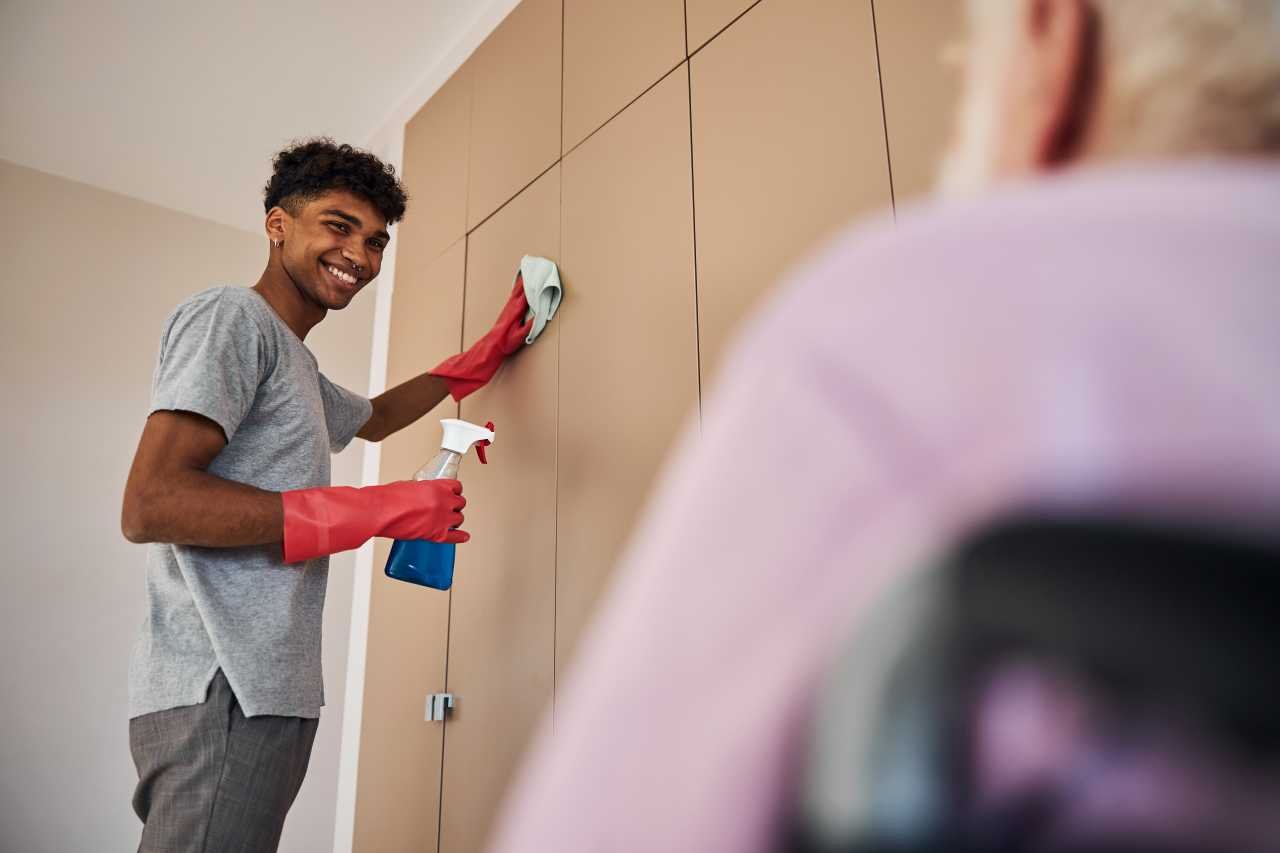
Touch points and scuffed wall areas in hallways and conference rooms accumulate faster than anything else on the list. Switch plates, push plates, and lever handles are disinfection targets in their own right.
That list is not exhaustive, but it covers what we find in the majority of buildings we take over from another provider.
How to Make Sure These Areas Actually Get Done
None of the items above are hard to clean. They are hard to clean consistently, and consistency is the whole problem. Four things fix it.
1. Put It in Writing, Area by Area
A generic scope produces a generic result. The document a building owner should ask for names the areas — restrooms, kitchen, conference rooms, individual offices, reception, corridors — and then names the tasks within each one. "Empty trash, replace liners, wipe bins" is a scope. "Manage waste" is not. If an area is not on the list, it is not being cleaned, regardless of what a crew member intends to do.
2. Confirm That Periodic Work Is Scheduled Separately
Most of these areas are quarterly, monthly, or annual tasks, and they cannot ride along with nightly service. A schedule that treats a deep-desk clean, vent cleaning, and glass cleaning as part of a nightly round is a schedule that quietly stops happening. If your provider cannot tell you when each periodic task was last performed, that is worth asking about directly.
3. Require Documented Verification
Clean Horizons uses Janitorial Manager, which assigns each cleaning task a location-specific QR code. Crews scan the code to open the checklist for that specific area, and the visit is logged with a timestamp. Clients can see when an area was last serviced, and our supervisors run their inspections from mobile devices, with the results stored in the cloud for reference later.
That matters for a practical reason. Anyone can say a task was completed. A timestamped record for a named area is a different kind of conversation, and it is what turns "we do high dusting" into something you can verify. When we are evaluating a facility, documentation is also one of the first things we ask to see.
4. Have the Right Tools and the Right Method
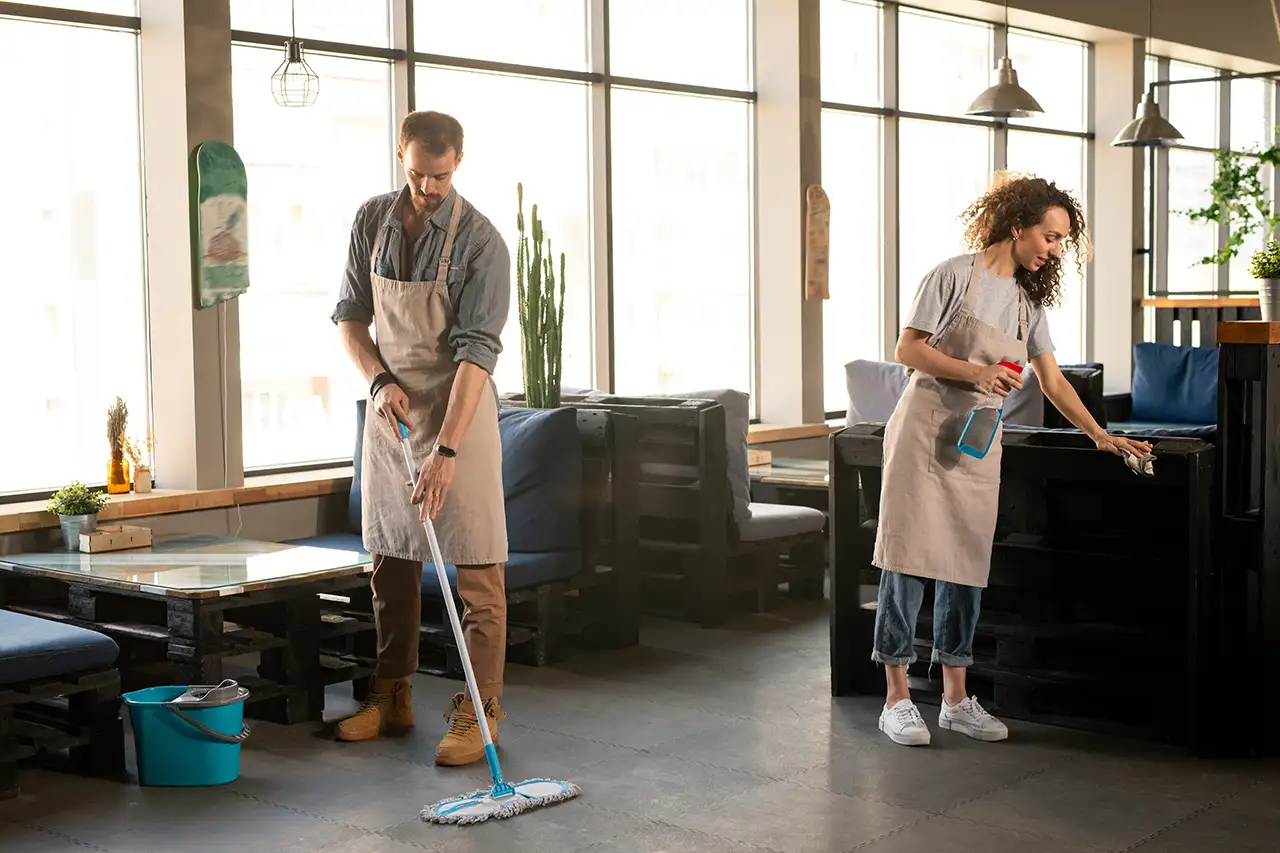
Low dusting just moves dust. We use HEPA-filter vacuums, microfiber cloths and mops, and color-coded equipment so restrooms are never serviced with the same tools as a kitchen. Microfiber requires less chemical solution than cotton string mops and leaves a cleaner floor, and reduced airborne dust is the point of the exercise. Whether the air is healthy depends on what leaves the cloth, not what goes on it.
5. Have Someone Accountable for the Building
Our crews are Clean Horizons employees, not subcontractors, and the same team stays assigned to a facility rather than rotating. A supervisor walks the site against a written checklist before the crew leaves, so problems get corrected during the visit instead of showing up on the next one. Retention matters here more than it might appear — a crew that knows the building can clean it properly in the time it takes. A new face every night cannot.
Where This Changes by Facility Type
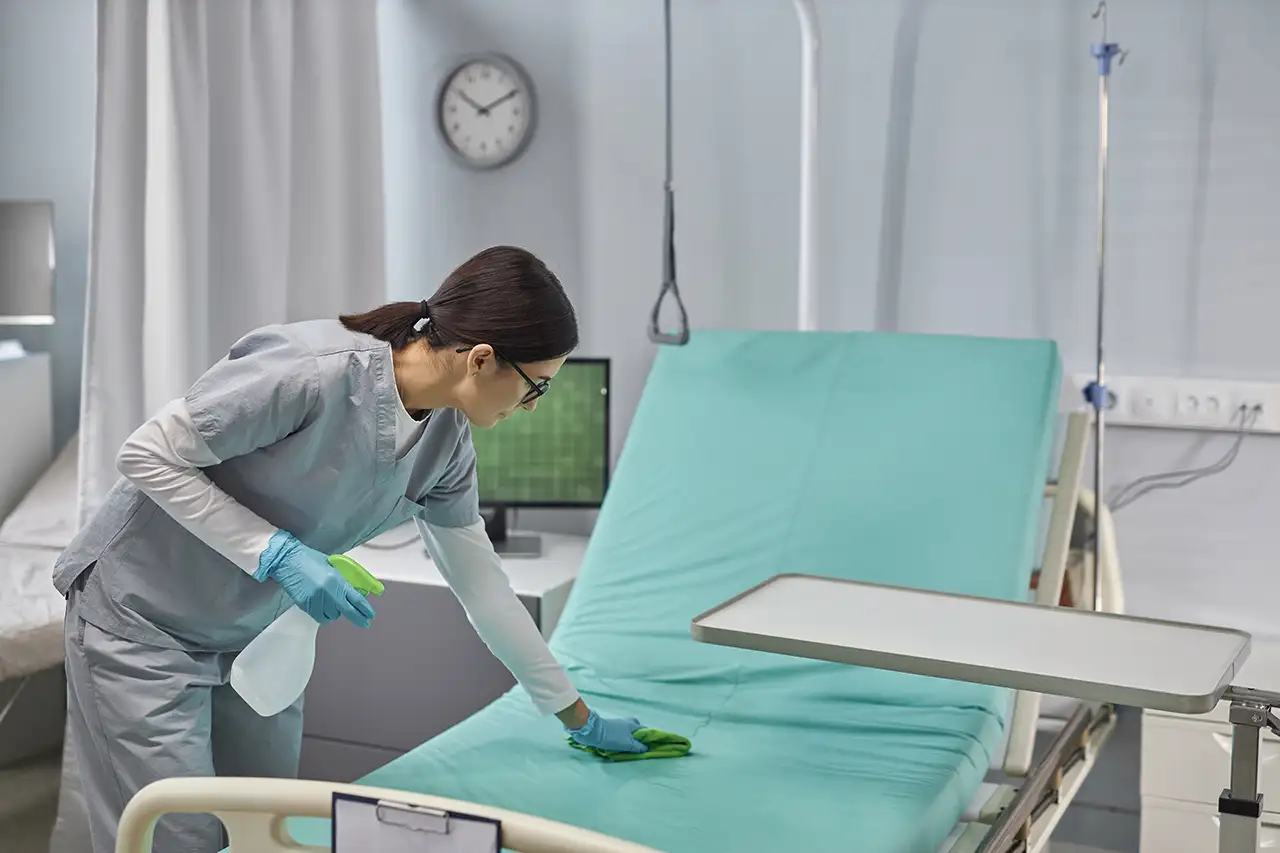
The list above is written for a general office, but the priorities shift with the building. High-touch and high-occupancy spaces like medical facilities and schools need protocol-driven disinfection of touch points and documented dwell times, not just a longer wipe-down. Restaurants invert the problem entirely — the kitchen equipment, hoods, and floors carry the risk instead of the corners. Warehouses and manufacturing facilities put the weight on floor care and dust control at a scale where the missed areas are loading docks, racking, and high bays. Our office and janitorial services page covers the standard build-out we start from, and we adjust it to the facility rather than selling the same scope everywhere.
A Clean Office Is a Maintained Office
None of the areas on this list is difficult to clean. Each one is skipped because nobody wrote it down, scheduled it, or checked it. The buildings that stay clean are the ones where the scope names the work, the schedule names the frequency, and someone records whether it happened.
That is the difference between a space that looks clean on a walk-through and one that is actually clean. If your building has areas you already know are being skipped, that is usually a scope problem rather than a crew problem, and scope problems are straightforward to fix.
If you would like a second opinion on what your current cleaning program is missing, or a walk-through of a facility in the Lehigh Valley, we are happy to look at it with you. Request a cleaning estimate or call (610) 657-5621.