

Originally published October 18, 2023. Updated October 28, 2026 with current EPA, CDC, OSHA and carpet-industry guidance, a task-by-task scope checklist, and what these services cost in the Lehigh Valley.
Most people find out what is included in commercial cleaning after the first invoice arrives. A crew is scheduled, the floors look fine, and it is still not clear whether the light fixtures were on the list, whether interior glass was in scope, or whether anyone was ever going to touch the baseboards. That is a reasonable question to want answered before signing anything, and it is a question most providers can answer in one page of a written scope if they have one.
Here is the part that trips people up. There is no single universal commercial cleaning checklist, because a warehouse with 30,000 square feet of racking and a two-room medical suite are not the same job. So when someone asks what do commercial cleaning services include, the answer depends on the facility and the frequency, with a core that shows up on nearly every recurring scope. What there is, in practice, is a consistent nightly layer, a second layer of tasks that are periodic, and a third layer that gets quoted separately. Know which layer a task sits in and you can compare two quotes side by side. Skip that and you are comparing prices on two different sets of work.
What is included in janitorial services
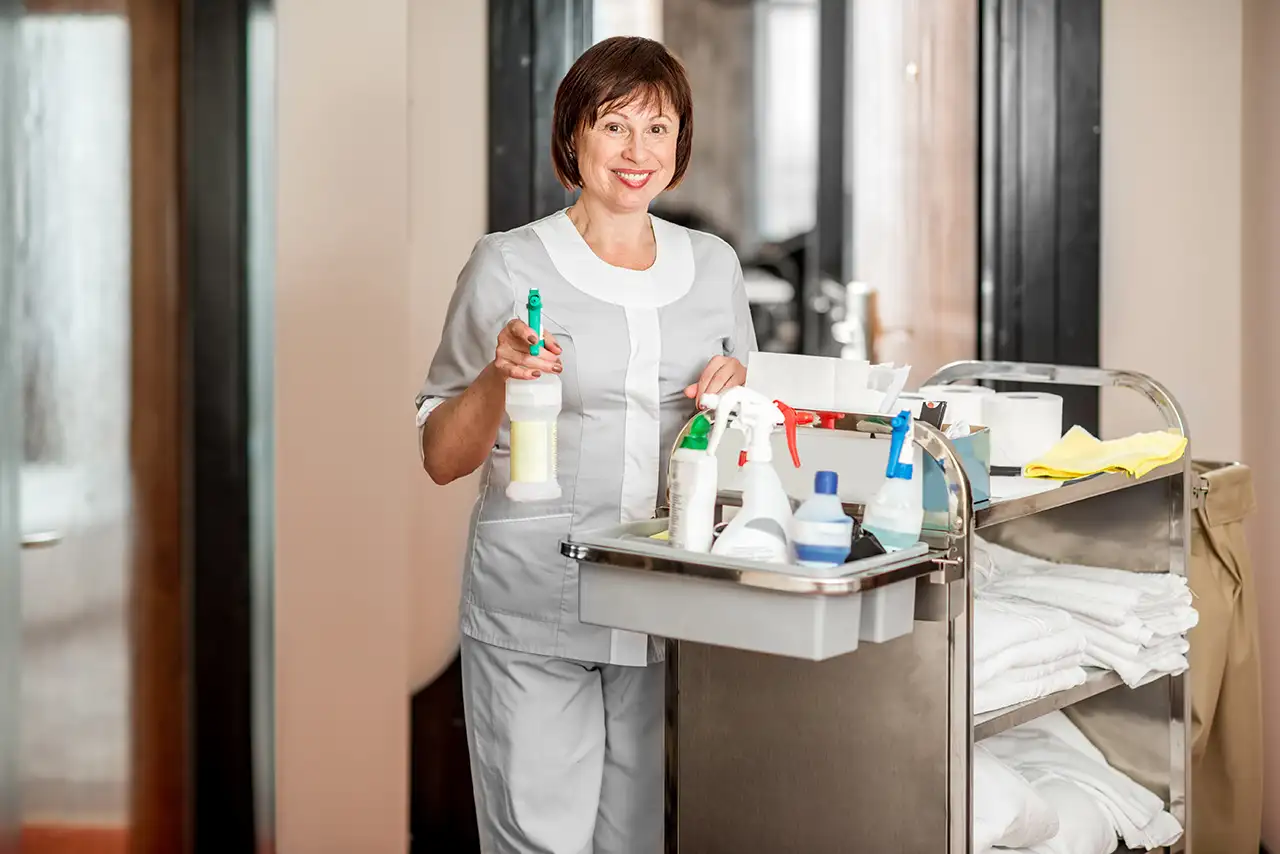
Standard commercial cleaning service usually covers, on every visit: trash and recycling removal with bin cleaning, restroom cleaning and disinfection with consumables restocked, dusting and surface wiping, floor care (vacuuming, dust mopping and damp mopping), kitchen and break room cleaning, and disinfection of high-touch points. A standard scope also includes interior glass and common-area tidying on most visits.
What is usually periodic rather than every-visit: detailed floor work (stripping, waxing, burnishing, carpet extraction), high dusting of ceilings and vents, restroom descaling, wall and partition washing, window and sill cleaning, and appliance interiors.
What is normally quoted as a separate line item: window work at height, pressure washing, biohazard or trauma cleanup, post-construction cleanup, daytime porter coverage, and electrostatic or fogging application. Each of those needs different equipment, different training, or a different insurance class, which is exactly why they do not belong in a nightly round.
What a standard visit covers, area by area
The tasks below are the ones that appear on nearly every recurring commercial scope. If a provider’s scope omits any of them, you are not getting a full cleaning.
Trash, recycling and waste
Deskside bins, shared bins in conference rooms, copy rooms and kitchens, with liners replaced and waste carried to the disposal point. The step most often left out is cleaning the container itself. Emptying a bin removes the waste, not the residue and the odor source lining the inside. OSHA’s sanitation standard for workplaces is explicit on the point: waste receptacles must be maintained in a sanitary condition, and solid waste has to be removed often enough to keep the workplace sanitary. 29 CFR 1910.141 covers housekeeping and waste disposal requirements.
Restrooms
Toilets, urinals and flush handles, sinks and faucets, mirrors, partitions, stall doors and locks, floors and walls. Consumables get restocked: toilet paper, hand towels, soap, seat covers. Any sharps container or sanitary receptacle is emptied and replaced on the schedule your local requirement calls for.
Restrooms should be cleaned and disinfected on every visit rather than folded into a weekly round, and the scope should say so in those words. It is the clearest quality signal a client can get, because a restroom tells the truth about the rest of the program. Some providers, including Clean Horizons, run a dedicated restroom system that standardizes the sequence and the equipment for that room type.
Dusting and surface wiping
Desks, shelving, tables, counters, ledges and horizontal surfaces. The difference between a real scope and a nominal one is whether “dusting” is broken into levels. Surfaces you can reach with a cloth and surfaces above door height are different tasks with different tools, and they belong at different frequencies.
Floor care
Carpet gets vacuumed, hard floors get dust-mopped and then damp-mopped. Microfiber mopping rather than cotton string mopping is standard practice now, since microfiber uses less cleaning solution and leaves a cleaner finish. Entrances and high-traffic lanes get more attention than the far corners of a floor plan, because that is where the soil actually comes from. The Carpet and Rug Institute puts a number on why that matters: 79% or more of the soil in carpet can be removed dry by vacuuming, which is why vacuuming frequency matters more than people expect. CRI’s commercial carpet standards cover the full program.
Kitchen and break room
Counters, sinks and faucet handles, appliance exteriors, tables and chairs, and the microwave interior. Break rooms generate more complaints than any other room in most buildings, and the reason is almost always frequency rather than technique. A sink that is wiped down once a week reads as a dirty sink by Tuesday.
High-touch disinfection
Door handles and push plates, switch plates, elevator buttons, railings, reception counters, shared desks, phones, and restroom fixtures. Correctness matters more here than frequency. The surface gets cleaned first, then disinfected, and it stays wet for the full contact time printed on the product label. EPA is unambiguous that disinfectants are pesticides regulated by the agency, that EPA verifies products work only according to their label directions, and that a disinfectant cannot make an efficacy claim against a pathogen unless EPA reviewed the supporting data. EPA’s list of registered disinfectants is the reference for finding one, and List Q covers emerging viral pathogens.
CDC’s guidance for community facilities makes the same point in plain language: clean high-touch surfaces regularly and other surfaces when they are visibly dirty, and clean before you disinfect because soil on a surface makes it harder for the chemical to work. When and How to Clean and Disinfect a Facility is a two-page read worth handing to any crew.
Interior glass, doors and common areas
Interior glass, partition glass, sidelights and door glass, plus general tidying of reception, conference rooms and walkways. Glass usually appears as a spot-clean on most visits and a full wash on a schedule, and it is worth specifying which you are buying.
How often the work should happen
Frequency follows traffic and soil, not the calendar. The Carpet and Rug Institute grades commercial carpet by traffic level and publishes recommended frequencies for each, and the same logic applies to the rest of the building. Here is the shape of a standard program.
| Area | Every visit | Added on a schedule |
|---|---|---|
| Restrooms | Full clean and disinfect, consumables restocked | Weekly: detail fixtures and grout. Monthly: descale and restock backup stock. Quarterly: deep grout and floor work |
| Offices and desks | Trash removal, dusting, high-touch disinfection | Weekly: ledges and shelving. Monthly: baseboards, walls, spot treatment. Quarterly: upholstery, vents, blinds |
| Carpet | Vacuum traffic lanes and entries | Weekly: vacuum all and spot treat. Monthly: interim maintenance in heavy zones. Quarterly: hot water extraction by zone |
| Hard floors | Dust mop and damp mop | Weekly: full mop of all areas. Monthly: scrub and buff traffic lanes. Quarterly: strip, seal and wax VCT |
| Break room | Counters, sink, appliance exteriors | Weekly: microwave and fridge exteriors. Monthly: appliance interiors and hood filters. Quarterly: behind and under equipment |
| Glass | Spot clean doors and partitions | Weekly: interior glass wash. Monthly: sills and tracks. Quarterly: full interior window set |
| High surfaces | Not on a standard visit | Monthly: high dust ledges and tops. Quarterly: fixtures, vents and ceiling fans |
For carpet specifically, CRI publishes the same idea as a traffic-level table, and it is worth having in front of you when a provider quotes you. The higher the traffic, the more often the vacuuming and the interim maintenance have to happen.
| Carpet traffic level | Vacuuming | Interim maintenance | Deep cleaning |
|---|---|---|---|
| Moderate | Daily at the entrance, 2 to 3 times weekly elsewhere | 1 to 2 times a year, more often in soil-prone areas | 1 to 2 times a year, monthly in soil-prone areas |
| Heavy | Daily at the entrance and on other floors | 6 to 12 times a year, more often in soil-prone areas | 2 to 6 times a year, bi-weekly in soil-prone areas |
| Severe | Daily at the entrance, twice daily in traffic areas, daily elsewhere | 12 to 52 times a year | 2 to 26 times a year, weekly in soil-prone areas |
That table is a reasonable starting point for the rest of the building, not a standard. A building with a loading dock and no break room, or a clinic with exam rooms, needs its own version. Ask for the frequency next to each task in writing, and ask which rooms are on the every-visit list and which are not.
What gets quoted separately
These tasks are real and often necessary. They sit outside the recurring round because each needs different equipment, different training, or a different insurance classification. Recognizing them in advance is what prevents the most common surprise in this industry: assuming something was included and finding out on the invoice that it was not.
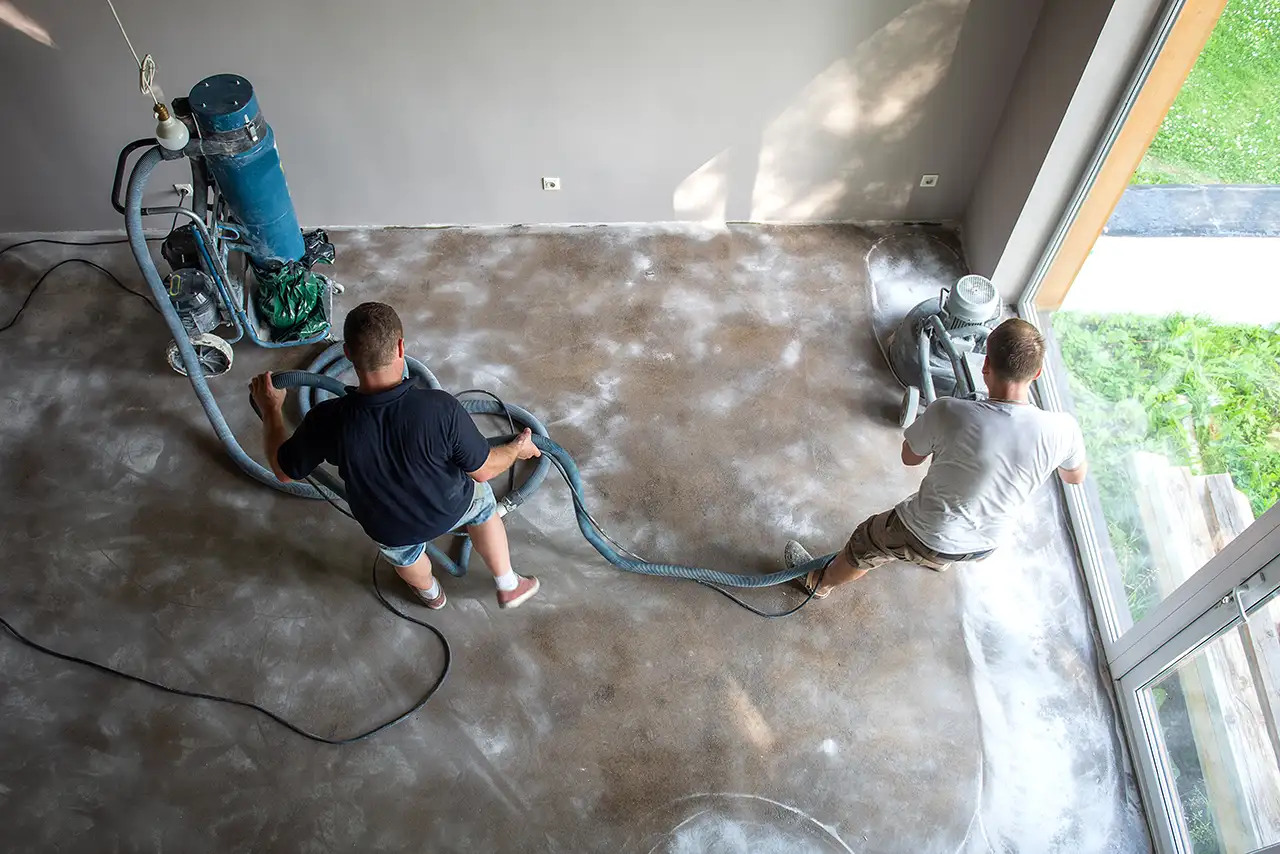
- Floor restoration stripping, waxing, buffing and burnishing of VCT, tile and vinyl, plus hot water extraction for carpet. A stripping and recoating cycle on VCT is a multi-visit project, not a single task, and it has to be planned around your hours.
- High dusting ceilings, wall tops, air vents, ceiling fans, light fixtures, ledges above door height. Quarterly or twice yearly, depending on the ceiling height and the ceiling space.
- Restroom descaling mineral buildup on grout, tile and fixtures. Periodic, because it accumulates on a timescale that nightly service will not touch.
- Window and facade work interior glass and sills, exterior glass, and anything at height. Exterior glass is usually a separate contract, and work above ground level carries its own insurance requirements.
- Pressure washing exterior surfaces, loading areas, sidewalks and hard surfaces.
- Daytime porter coverage a staffed presence during business hours instead of after-hours service. It is a different staffing model, so it is priced differently from a night visit. Ask how it is scheduled and who supervises it.
- Electrostatic or fogging application worth understanding before you buy it. CDC states that in most cases fogging, fumigation and wide-area electrostatic spraying are not recommended as primary methods of surface disinfection, because they carry safety risks, unless the product label says those methods may be used. If a provider offers this, ask for the product name, the EPA registration number, and the contact time the label requires.
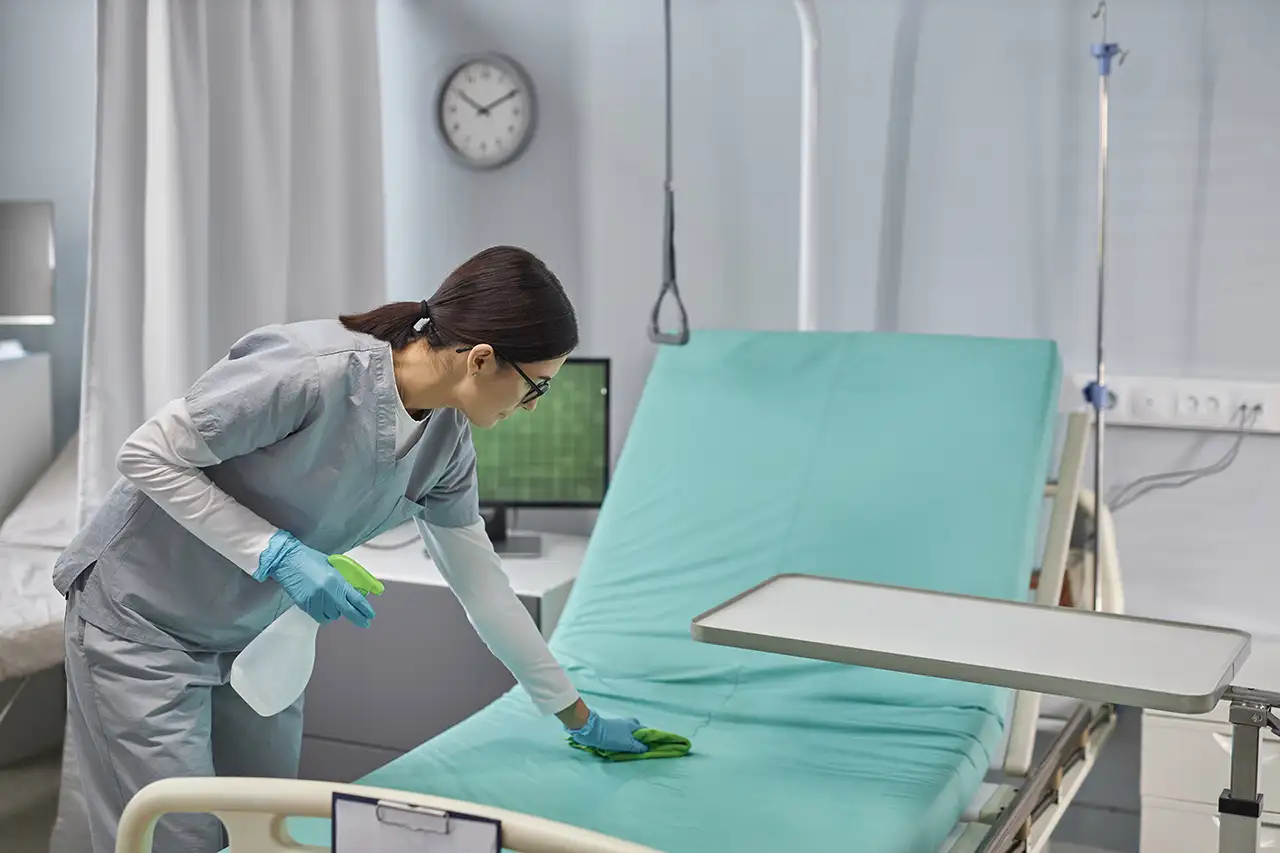
- Biohazard and trauma cleanup bloodborne pathogen and trauma work runs under its own protocols, with specific training and personal protective equipment requirements. Confirm that a provider’s people are trained for it and that their insurance covers it before that work is assigned to them.
- Post-construction cleanup a distinct discipline from janitorial work: debris removal, HEPA vacuuming of construction dust, and detailed surface work so a space can be handed over for occupancy. Our post-construction cleaning service covers that process.
What is normally not included
Good scopes also state what is excluded, and this is the half of the conversation most people skip. Standard commercial cleaning generally does not include personal items on desks, the inside of desk drawers, personal electronics, moving large furniture, organizing papers or files, groundskeeping and exterior landscaping, hazardous material handling, or repairs of any kind. If your building needs those, they get quoted separately or handled by another trade. Knowing that in advance prevents a surprise on either side.
How the scope changes by facility type
A commercial office scope centers on desks, restrooms, kitchens and floors. A warehouse scope shifts almost entirely to floor care, dock areas, high bays and dust control at a completely different scale.
restaurants and hotels are effectively around-the-clock operations with food code and health requirements attached. A medical facility operates under infection control standards that a general janitorial scope does not meet, and CDC’s guidance for healthcare environmental services calls for documented cleaning schedules, methods and products rather than a general checklist.
churches and schools balance unusual operating hours against public accessibility, and their scopes tend to be event-driven rather than uniform.
So the useful question is not “what is included in commercial cleaning” in the abstract. It is whether this scope matches your building, at your hours, with your compliance obligations.
What these services cost in the Lehigh Valley
Commercial cleaning is priced per square foot, by frequency, or as a fixed monthly program, and which structure applies depends on the building. These are honest planning ranges for the Lehigh Valley, not a rate card. Your actual number comes from a walkthrough.
| Facility type | Typical range per sq ft per month |
|---|---|
| Professional offices | $0.08 to $0.15 |
| Medical and dental offices | $0.12 to $0.20 and up |
| Retail and showrooms | $0.10 to $0.18 depending on traffic |
| Restaurants | $0.15 to $0.25 with kitchen scope |
| Warehouses and industrial | $0.05 to $0.10 for non-production areas |
| Schools and daycares | $0.09 to $0.16 with restroom-heavy scope |
| One-time deep cleans and post-construction | $0.10 to $0.30 per sq ft, quoted per project |
Square footage alone does not set the price. Frequency matters, and so does floor finish, since carpet, VCT and polished concrete each clean differently. Density matters too: a 10,000 square foot office with 40 staff is more work than a warehouse of the same size with five people in it. The commercial cleaning pricing page breaks down the variables that move a quote.
How to compare two quotes
Most quote comparisons fail because two providers priced two different scopes. These are the questions to ask when hiring a cleaning service, and the answers are what close that gap.
- Is the scope written by area and task? If it does not name specific rooms and specific tasks, neither you nor the crew working from it can verify that anything got done.
- What is every-visit versus periodic, and at what frequency? A scope that does not separate the two will either overpromise nightly work or quietly under-scope the periodic work.
- Who is doing the work? Ask whether crew members are employees of the company or subcontractors. Subcontracting means less control over training and turnover, and it means your building’s keys are in the hands of people who rotate.
- Who supplies the consumables? Restroom paper, soap, liners and sanitizer should be named in the scope, along with who pays for them and who restocks them.
- How is completion documented? Scannable task verification, supervisor inspections with recorded results and access to a service history are what make a provider accountable. Without them, quality is an assertion.
- What is excluded? Get the exclusion list in writing. A provider who is comfortable naming what they do not do is a provider whose inclusions you can trust.
- What happens when something is missed? Know the escalation path, the response time, and whether the correction happens without a credit.
We cover the selection process in more depth in what to look for in a commercial cleaning service, and the areas crews most often miss are detailed in commonly missed areas in office cleaning.
Questions we hear most
Are restrooms included in a standard office cleaning service?
They should be, on every visit, and the scope should say so explicitly rather than folding restrooms into a weekly round. If a quote puts restrooms at weekly or monthly frequency, ask what it assumes about traffic and about the consumables that go with it.
What is the difference between a standard visit and a deep clean?
A standard visit is the maintenance layer: trash, restrooms, floors, surfaces, high-touch disinfection. A deep clean is the restoration layer, work that removes buildup the maintenance layer never had to deal with: grout, mineral scale, wall marks, embedded carpet soil, build-up on hard floors. A building that only has standard service and no periodic work will show it in the floors first.
How often should an office be professionally cleaned?
Most occupied offices are cleaned nightly or several nights a week, which keeps the every-visit tasks from stacking up. Small offices with low traffic can be cleaned weekly with a monthly touch-up. The right answer follows the same logic as carpet: frequency tracks traffic and soil, so it should be set after a walkthrough rather than picked off a menu.
Do cleaning companies provide the soap and paper towels?
It varies, and it is a line item worth settling early. Some providers include consumables in the monthly program, some charge them at cost, and some leave it to the client. Either arrangement works. An unstated one is what causes friction at renewal.
Should interior glass be in my scope?
Ask for it as a specific line. A spot clean of door glass and partition smudges on every visit is standard, and a full interior window wash is normally periodic. Partition glass in a conference-heavy office can be a weekly task instead. Fingerprints on partition glass are the complaint that makes people think a building is dirty, so it is worth pricing properly.
What is the single most useful thing to check after the first month?
Compare the service history against the scope, task by task, and walk the building yourself at the same hour the crew works. If the records say every visit and the building says otherwise, you have your answer, and you have it in writing.
What Clean Horizons includes
Since the question is what is included, here is our side of it, specifically. We have provided janitorial and commercial cleaning in the Greater Lehigh Valley for more than 20 years, and we work out of Catasauqua across Lehigh, Northampton, Bucks and Berks counties.
- Employees, not subcontractors. Every cleaning team member is employed by Clean Horizons. Nobody rotates through your building from a staffing pool.
- Background checks and random drug testing for every cleaning team member, plus supervisor spot checks on completed work.
- Janitorial Manager software for checklists, inspections and documentation, with Scan4Clean QR codes at each area so the crew scans to open the right checklist and you can see when an area was last serviced. Our about page shows how it works.
- Microfiber mopping over cotton string mopping, HEPA-filter vacuums and reusable microfiber cloths, on a documented green cleaning program.
- Quality control supervisors working from a comprehensive checklist of all work performed, confirming it is complete before the crew leaves the site.
- Service hours from 8am to 10pm, seven days a week, including after-hours and overnight schedules.
Our services hub covers the full range, and our service areas cover Allentown, Bethlehem, Easton and Quakertown among others.
Sources
- OSHA 29 CFR 1910.141, Sanitation (housekeeping and waste disposal requirements for workplaces)
- CDC, When and How to Clean and Disinfect a Facility (cleaning versus disinfecting, contact time, and guidance on fogging and electrostatic application)
- EPA, Selected EPA-Registered Disinfectants and List Q for emerging viral pathogens
- CRI 204, Commercial Carpet Standard for Maintenance and Cleaning (traffic-based vacuuming, interim and deep cleaning frequencies)
(610) 657-5621